

The gut microbiome has become one of the most researched areas in nutritional science over the last decade, and one consistent finding keeps emerging: dietary diversity, particularly from fermented foods, is one of the most reliable ways to support it. Not supplements, not cleanses. Fermented food.
The science is still developing in places, but the direction is clear enough to act on.
Key Takeaways
- A Stanford clinical trial found that six daily servings of fermented foods increased gut microbiome diversity and measurably reduced systemic inflammation within 10 weeks.
- The gut-skin connection is real: a less diverse gut microbiome is linked to increased intestinal permeability, which allows inflammatory compounds to enter the bloodstream and show up as skin inflammation.
- Not all fermented foods contain live bacteria. Heated, pasteurised, or vinegar-brined products don’t provide the same benefit as traditionally fermented varieties.
- You don’t need six servings a day to benefit. A consistent daily serving or two is a practical starting point.
What Fermentation Actually Does
Fermentation is the process by which bacteria, yeasts, or other microorganisms break down sugars and starches in food. The by-products include lactic acid (which preserves the food and gives it that tangy flavour), vitamins B12, K, and C, and the live microorganisms themselves.
When you eat traditionally fermented foods, you’re introducing those live microorganisms to your gut. Once there, they can temporarily colonise the digestive tract, compete with harmful bacteria, strengthen the gut barrier, and produce short-chain fatty acids that reduce inflammation.
Research published in PMC (2024) found that fermented food microbiomes strengthen the gut epithelial barrier, modulate immune responses, and may reduce the risk of inflammatory conditions.
The Main Fermented Foods and What They Offer
Yogurt
Plain full-fat yogurt is the most accessible fermented food. It contains live Lactobacillus and Bifidobacterium strains that have been extensively studied for gut health, immune function, and even skin conditions including eczema. Look for “live active cultures” on the label. Heated or UHT yogurt has killed the bacteria.
Kefir
Kefir is fermented milk with a wider range of microbial strains than yogurt, including both bacteria and beneficial yeasts. It’s more liquid than yogurt and has a slightly effervescent quality. Research suggests it provides greater diversity of probiotic strains and stronger anti-inflammatory effects than standard yogurt.
Kimchi
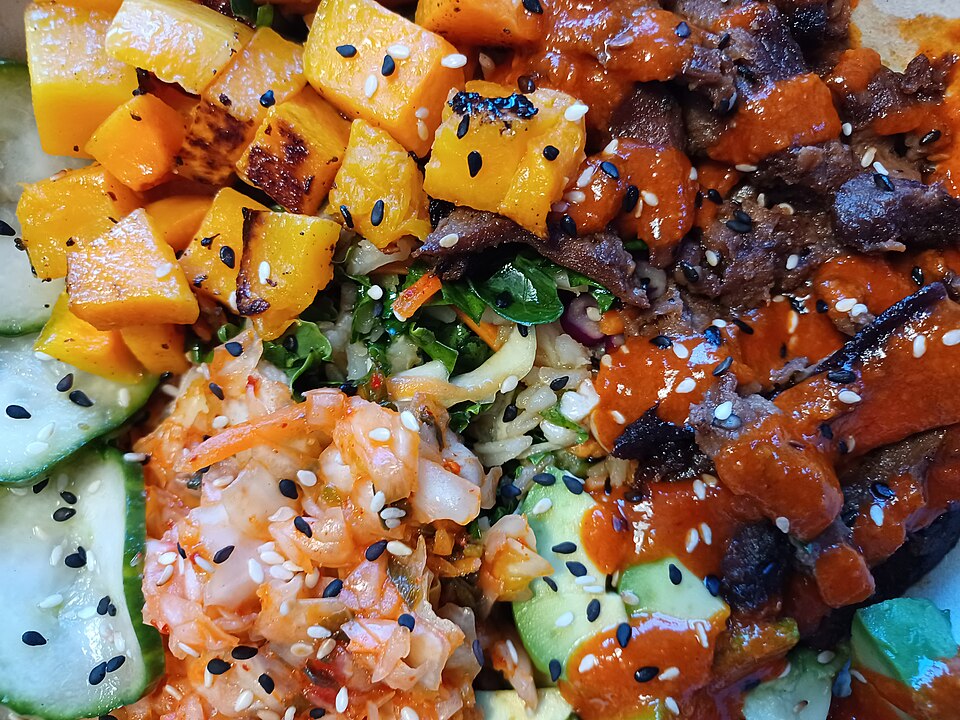
Kimchi is fermented cabbage (and sometimes other vegetables) seasoned with garlic, ginger, chilli, and gochugaru paste. It’s the fermented food with the best data for gut microbiome diversification specifically: a 2025 review in Natural Sciences found kimchi consumption consistently increased Lactobacillus diversity in the gut.
The skin-gut connection is particularly relevant here: kimchi’s combination of fermented bacteria, fibre from the cabbage, and anti-inflammatory compounds from the garlic and ginger makes it a standout food for reducing gut-linked inflammation that shows up in skin.
Sauerkraut
Sauerkraut is fermented cabbage with a much simpler profile than kimchi: just cabbage and salt. It’s tangy, keeps for months in the fridge, and provides both live bacteria and high fibre content that feeds existing gut bacteria.
Important: only raw, unpasteurised sauerkraut from the refrigerated section (or homemade) contains live bacteria. Shelf-stable tinned sauerkraut is heat-treated and provides fibre but not probiotics.
Miso
Miso is fermented soybean paste used most commonly in Japanese cooking. It contains Aspergillus oryzae, a beneficial mould, along with a complex profile of amino acids and B vitamins produced during fermentation. It has a deep, savoury flavour that adds umami to soups, marinades, and dressings.
One caveat: miso is high in sodium. Used as a seasoning in small amounts, this isn’t a concern. Eaten in large quantities daily, it can contribute to high sodium intake.
Kombucha
Kombucha is fermented tea, typically produced using a SCOBY (symbiotic culture of bacteria and yeast). The probiotic content depends heavily on the brand and production method. It also contains small amounts of alcohol (typically 0.5 to 3%) and significant amounts of acid, which makes it unsuitable for people with certain digestive conditions.
The evidence for kombucha specifically is thinner than for yogurt, kefir, or kimchi. It’s a useful addition but not the priority if you’re starting out.
The Gut-Skin Connection
Your gut and skin communicate through overlapping pathways: the immune system, the endocrine system, and the nervous system. When the gut barrier is compromised, bacterial by-products can enter the bloodstream and trigger systemic immune responses that show up as skin inflammation.
Conditions strongly associated with gut dysbiosis include acne, eczema, psoriasis, and rosacea. This doesn’t mean gut issues cause all skin problems. It means the connection is real enough to be worth addressing through diet, and fermented foods are one of the most evidence-backed tools for improving gut barrier function.
How Much Do You Actually Need?
The Stanford trial used six daily servings and produced measurable improvements in microbiome diversity and inflammatory markers within 10 weeks. That’s a lot for most people to sustain.
A more practical starting point: one or two servings of fermented food per day, consistently. A cup of yogurt at breakfast, a serving of kimchi at dinner. Consistency over weeks matters more than quantity in any given day.
If you’re not currently eating any fermented foods, start with one and build from there. Some people experience temporary bloating when first increasing their intake, as the gut microbiome adjusts. This is normal and typically resolves within a week or two.
What to Buy (and What to Avoid)
Buy: Refrigerated, raw, unpasteurised fermented products with live cultures listed on the label.
Avoid: Shelf-stable pickled vegetables (usually vinegar-brined, not fermented), heated or pasteurised yogurt, UHT kefir.
The tell is temperature and label. If it’s on a room-temperature shelf and doesn’t say “live active cultures,” it’s not providing probiotics. If it’s in the refrigerated section and says “contains live cultures” or “raw,” you’re on the right track.